

"The Certified Financial Modeler program offers an excellent opportunity to expand and structure theoretical financial modeling knowledge. Through a practice-oriented approach, the acquired know-how can be easily applied in daily professional life."

"As a management consultant in the field of renewable energies, financial modeling is an essential component of every project, business plan, and financing endeavor. The Certified Financial Modeler program combines theory and practice in a very implementation-oriented way and imparts important Excel skills for reviewing, modeling, and graphically preparing complex financial models. The Certified Financial Modeler is thus able to create complex integrated financial models and perform company valuations – which are, of course, also necessary in the field of renewable energies."
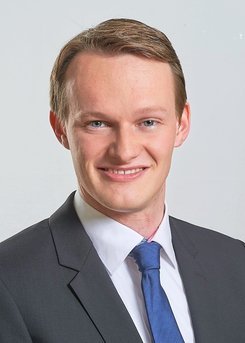
"As an investment manager, it is my responsibility to value companies as part of M&A activities. To further deepen my skills in this area, I decided to pursue part-time training as a "Certified Financial Modeler" at the European Institute of Quantitative Finance (EIQF).
I would like to express my sincere thanks to Prof. Joachim Häcker and Prof. Dietmar Ernst for their excellent support, well-founded answers, and detailed explanations to my queries. The structuring of the content was first-class and covered a broad spectrum, from balance sheet analysis and cash flow considerations to portfolio structuring. The Financial Modeling videos were particularly helpful, not only being easy to understand but also assisting in solving complex tasks and developing a deep understanding.
I can recommend this course to anyone who wants to acquire or deepen their solid knowledge in the field of Financial Modeling. Given that "digitalization and new business models are disrupting the 'Old Economy'", I am now considering continuing my education by pursuing an MBA."

"The Certified Financial Modeler is very interesting, informative, and practical. Likewise, the certificate course is ideal in conjunction with a degree program, as the acquired ECTS can be submitted for recognition at colleges and universities. The recognition process after receiving the Certified Financial Modeler certificate went smoothly and without problems."