
Testimonials
Whether graduates, professionals, or entrepreneurs, our programs such as the MBA, DBA, or certified finance qualifications have supported many on their career paths. Their success shows that continuing education is the key to success. Get inspired!
View testimonials for:
Financial Engineer
The Certified Financial Engineering program is one of the best learning experiences I have ever had. It is a well-designed course with a strong practical focus. I am very satisfied with the training offered by the European Institute of Quantitative Finance. The training is entirely based on industry projects and practical solutions to real-world problems. The instructors are highly competent, have excellent industry knowledge, and can identify students’ needs. The guidance provided by the instructors was excellent, and the overall experience was very good. If you want to optimize your technical skills, I personally recommend joining EIQF.
E. Delali Aggor, Certified Financial Engineer, Technical University of Berlin
The Certified Financial Engineer program offered by the European Institute of Quantitative Finance (EIQF) was very useful in my case, as it is well structured and takes the latest developments in this field into account. It is among the best in the world and offers all participants an excellent opportunity for theoretical and practical improvement.

Luis-Felipe Arizmendi, Certified Financial Engineer, Senior Lecturer and Researcher, Universidad Nacional Mayor de San Marcos (Lima, Peru) and Universidad de Murcia (Spain)
The Certified Financial Engineer emphasizes the importance of knowledge within the financial world. The worldwide regulatory body cannot replace continuous education. It is the depth of the Certified Financial Engineer program that portrays a new picture to participants and sets a whole new standard for the financial community.

Maximilian Belmont
Merrill Lynch, New York
The Certified Financial Engineer program from the European Institute of Quantitative Finance is a practice-oriented qualification in the field of derivatives. In terms of content, it covers valuation methods for options and futures (binomial model, Black-Scholes-Merton model) as well as different strategies (bullish, bearish, and neutral strategies). Thanks to a comprehensive course book, the content is easy to understand even without prior knowledge. If you get stuck, the professors provide helpful support. You are very flexible in terms of time, which means the course can also be completed alongside your job. The course can be credited toward the MBA program. This course is highly recommended for anyone who would like to further their education in derivatives.
Michael Bichlmeier, Certified Financial Engineer, Portfolio Manager
I really enjoyed the Certified Financial Engineer program due to its practical application in Excel and the excellent transfer of knowledge it enabled. I was finally able to learn how to work effectively with derivatives expertise and create added value—whether for my clients or in my own trading in the markets. This was an excellent technical and practical complement to the Certified Financial Modeler. The teaching materials were of outstanding quality, offering valuable content both for those who prefer videos and for those who prefer the classic textbook. The implementation examples are true treasures for one’s personal repertoire, allowing you to refer back to them as a reference in the future. I also appreciated the deep financial-mathematical theory, which sharpens fundamental understanding. The investment in this program will certainly yield a high return!
Tobias Blüder, Certified Financial Engineer, Junior Consultant Banking Business, targens GmbH
The Certified Financial Engineer program has an in-depth knowledge of complex derivatives, risk management and traditional & non-traditional ways of valuing companies. The certification provides an opportunity to practice and understand advanced financial and statistical models coupled with a practical approach to effectively use them. By completing the Certified Financial Engineer program, I have observed that my skill set acquired via my academic and work experience in Corporate/Commercial & Investment Banking has improved and strengthened significantly. Going forward, I believe this program will facilitate me to further progress in my career. In my opinion, this is a well-structured program with extensive relevant content that will help starters and seasoned professionals in the field of investment, derivatives, and financial engineering.

Sarosh Hyder, Certified Financial Engineer, HfWU
Regulation does not help as much as education. With this comprehensive book everybody can learn easily the chances and risks, and applications of products in financial markets. I have been waiting for this book to use it in my training courses.

Professor Dr. Uwe Wystup,
Managing Director of MathFinance AG
The Certified Financial Engineer program offers an ideal opportunity to enter the world of financial engineering alongside your career. In terms of content, Modules I and II guide you through various areas of the derivatives world. The final thesis in Module III clearly sets this program apart from comparable postgraduate programs, which is certainly a mark of quality. In addition, the excellent support from the EIQF team deserves special mention. The solution-oriented approach found throughout financial engineering has sustainably changed the way I think about financial markets.
Steffan Scholl, Certified Financial Engineer
Bethmann Bank AG, ABN AMRO Group, Treasury & Securities
Through the Certified Financial Engineer program, I was able to build a high level of expertise in financial engineering. The broad theoretical content was explained fully and very clearly, and the practical implementation was continuously conveyed in an illustrative way. Ethical and historical aspects were also addressed and rounded off the program excellently. The program was therefore designed to be very flexible both in terms of topics and time. With the option to take an exam once a month, I was always able to adapt the program to my professional commitments and my learning pace.
Julian Barth, Certified Financial Engineer
ERGO Versicherungsgruppe AG
Load more
The Certified Financial Engineer Program helped me a lot in connecting the dots between the different fields of Financial Engineering. I became familiar not only with plain vanilla instruments but also with a huge variety of exotic instruments which are essential for understanding, creating, and valuing structured products. The strong focus on practice-oriented issues is more than useful for those who are interested in Financial Engineering and for those who want to widen their big picture of the financial industry. I highly recommend the Certified Financial Engineer Program to everyone who aims to strengthen his/her knowledge and applicable know-how and who wants to proof his/her competences in the more and more complex field of financial derivatives.
Florian Balz, Certified Financial Engineer
University of Strathclyde – Business School
The Certified Financial Engineer program provides in-depth, practice-oriented expertise in the valuation and application of derivatives. Especially in the complex world of derivatives, it is essential to know and be able to manage the individual components of price formation in detail. Being a Certified Financial Engineer does not only mean being an expert; above all, it stands for the ethically responsible use of derivatives.
Simon Schäfer, Certified Financial Engineer
DAB Bank
The Certified Financial Engineer qualification is an ideal way to transfer the theoretical prior knowledge gained during your studies into application-oriented practice. As a Certified Financial Engineer, you can visibly demonstrate that you have internalized the opportunities and risks of derivative financial instruments. The program also adapts individually to participants’ existing level of knowledge. With the help of an optional seminar, expertise can also be built up in a short time.
Dirk Meinecke, Certified Financial Engineer
Stuttgart Stock Exchange
In the Certified Financial Engineer program, participants will learn about realistic, practice-oriented tasks in derivatives or risk management through a case study and solve them independently. The division into manageable smaller tasks makes independent work much easier, as you can develop the methods step by step. The accompanying material is very helpful and clear, and it always references further reading. In the risk management specialization, common and comparatively simple methods are covered first; later, the program works with GARCH models, copula functions, and Monte Carlo simulations. By combining MS Excel with Crystal Ball and Risk Kit, even these more complex tasks can be handled very well, while maintaining the clarity and ease of use of an Excel model. The professors always provide quick feedback on the model and offer support if anything remains unclear despite the course book. For anyone who would like to get to know this area or expand and deepen existing knowledge, the Certified Financial Engineer program is an excellent opportunity.

Alexander Walter, Certified Financial Engineer, LBBW
I consider the Certified Financial Engineer program to be a noteworthy professional development credential on a résumé. After completing the program, you have comprehensive knowledge in the field of derivatives. In addition, the course provides practical examples of how institutional traders use the knowledge taught to gain advantages in the market. The support from the chairs of the European Institute of Quantitative Finance is outstanding. You receive answers and feedback to questions within a very short time. I am confident that the Certified Financial Engineer has brought me one step closer to my professional goals, and I can recommend it to anyone who has an affinity for the financial markets.

Lee-David Watzlawik, Certified Financial Engineer, Deutsche Bank
The Certified Financial Engineer program is recommended for anyone interested in derivatives or risk management. During my bachelor’s degree, I had the opportunity to learn about risk management in a theoretical context. That made it all the more exciting to now gain practical experience in risk management as well. The professors’ enthusiasm for risk management is clearly noticeable and transfers to the Certified Financial Engineer candidates.
Nicole Winkler, Certified Financial Engineer, HfWU
The Certified Financial Engineer program provides a very good overview of the field of financial engineering. Thanks to its three-stage structure, participants have the opportunity to engage intensively with derivative financial instruments and thus build know-how or deepen existing knowledge. In particular, preparing the Certified Financial Engineer thesis and the associated intensive work on the self-selected topic area provided significant added value for me. All in all, it is an excellent opportunity for education and professional development, and a very good chance to underline your competence in financial engineering.
Herwig Krist, Certified Financial Engineer
Sparkasse Oberösterreich
Capital Markets / Treasury
Head of Markets
I am very pleased that, at the end of my studies, I decided to participate in the Certified Financial Engineer program. After gaining a theoretical background in derivatives at Justus Liebig University Giessen, I wanted to deepen and expand my knowledge by looking at the application side. After completing the Certified Financial Engineer program, I can say with conviction that what I learned exceeded my original expectations. I can now choose the best strategy from around twenty different options strategies—depending on my risk preference, market volatility, and the expected bullish or bearish direction of the market. Learning financial modeling standards and the many hours I spent on them significantly improved my Excel modeling skills. Now even the most complicated financial calculations seem within my reach—which was not the case before. In summary, I can recommend this program to anyone who wants to gain a competitive edge on their résumé, broaden their understanding of derivatives, and learn how to play a new instrument well.
Mark Pavin, Certified Financial Engineer, University of Giessen
Education is, alongside energy, the growth market of the future. Through the “Certified Financial Engineer” program, the European Institute of Quantitative Finance (EIQF) was able to capture a small share of this potential market.
Participation in this program broadens one’s horizons and equips the student with the ability and confidence to translate theory into practice.
It is also worth mentioning the tremendous and ongoing support provided by Mr. Bloss in particular.

Björn Habisch, Certified Financial Engineer
ALTE LEIPZIGER Trust Investment-Gesellschaft mbH
Professionally, I work in the field of trade surveillance (market manipulation, insider trading). In this context, the Certified Financial Engineer program from the European Institute of Quantitative Finance (EIQF) helped me deepen my expertise in derivative trading strategies. The program teaches the methods relevant in practice for structuring, managing, and valuing derivatives in a goal- and practice-oriented manner. In particular, the quantitative focus and the independent development of complex financial-mathematical models motivated me greatly. In addition to applying the derivatives knowledge learned through self-study, I was able to expand my toolset of financial modeling standards/methods for structuring and managing financial models. I can recommend the Certified Financial Engineer program to anyone who is passionate—both professionally and privately—about capital markets and financial instruments.
Juliane Schütz, Certified Financial Engineer, Senior Manager, Capital Markets Compliance, KPMG
Sustainability is of substantial importance not only in investing, but also in the education of today’s financial engineers. In this respect, the Certified Financial Engineering program of the European Institute of Quantitative Finance (EIQF) is a meaningful and effective addition to training for the entire industry. It affects the entire value chain. The training content and its consistently practice-related connections are impressive. We wish the Certified Financial Engineer program continued success.
Michael Streich
Managing Partner
Bamboo Ventures
The Certified Financial Engineer program from the European Institute of Quantitative Finance is an ideal course for anyone who would like to further their education in financial derivatives. I particularly liked the structured setup and the case-study approach. Practical scenarios make all interrelationships visible and easy to understand. Another advantage is that the Certified Financial Engineer and the Certified Financial Modeler (in the “Academic Excellence” track) can be credited toward the MBA of Applied Quantitative Finance offered by the institute. This flexibility is very important to me.

Enzo Trovato, Certified Financial Engineer, Eurex | Deutsche Börse Group
Based on the experience I was able to gain in financial modelling and financial engineering, I can warmly recommend the European Institute of Quantitative Finance (EIQF) to all finance enthusiasts. Despite my congenital condition, the ability to learn independently of location and time helped me greatly, as I was ultimately able to implement what I learned in practice independently and with personal initiative.
Kamil Mammadov, Certified Financial Engineer, Munich University of Applied Sciences
The Certified Financial Engineer program is an excellent opportunity to deepen a wide range of areas within the subject of “finance” flexibly through self-study and to focus more strongly on individual interests. A wide variety of derivatives are covered and discussed extensively from a theoretical perspective. The practical relevance is always evident. In addition, you gain further insights into trading derivative instruments as well as portfolio and risk management. I really appreciated the versatility of these topics, the support from the EIQF team was very good, and thanks to the high level of flexibility, it was also very feasible to complete alongside regular university studies and other professional commitments.
Timo Niere, Certified Financial Engineer, Leibniz University Hannover, KPMG Germany
The Certified Financial Engineer program offered by the European Institute of Quantitative Finance (EIQF) is an excellent choice for anyone who needs in-depth expertise in derivatives for their day-to-day work. With self-study and perfect support from the professors, it offers a unique opportunity to qualify in a highly flexible way. The program conveys theoretical knowledge in financial engineering very clearly and with a very close link to practice. Knowledge is acquired step by step, from the fundamentals to absolute expert knowledge. The skills acquired can be applied very well in practice. Overall, I can recommend the program to anyone who wants to become an expert in this field.
Daniel Sander, Certified Financial Engineer, Warburg Invest
The Certified Financial Engineering program is also ideally suited for students who want to dive deeper into the world of financial derivatives while still studying and before starting their careers. Over the course of the three modules, I learned about common plain-vanilla options and futures strategies, all the way to creating, valuing, and simulating complex and structured products. I was then able to demonstrate what I had learned by writing a thesis. I also particularly liked that I can combine the program with further training from the Deutsche Börse Academy.
Vincent Günter Uhlke
University of Bamberg
The Certified Financial Engineer program clearly teaches how to handle financial products and how to value derivatives that are traded both on exchanges and OTC, and it offers an internationally recognized qualification opportunity to demonstrate your competencies in the field of derivatives. In addition, the cooperation between EIQF, Eurex, and Deutsche Börse AG gives the title an excellent external reputation.
Barbora Ezechiasova, Certified Financial Engineer
Stuttgart Stock Exchange
As a flexible, part-time qualification, the Certified Financial Engineer program provides comprehensive insights into the world of financial derivatives. Under the patronage of Eurex and Deutsche Börse AG and in combination with their complementary offerings, graduates can acquire the knowledge required to work in derivatives markets. The final thesis on a self-selected topic is another opportunity to deepen qualifications in the desired area in a practice-oriented way. I found the Certified Financial Engineer program interesting and very motivating, especially because the newly acquired knowledge enables you to better understand the risks in derivatives trading and to manage and monitor them more effectively using various analytical tools.
Peter Krizan, Certified Financial Engineer
Through the Certified Financial Engineer program I could deepen and broaden my knowledge about derivatives. The program is well structured and with a self–study mode flexible to handle for everyone. The acquired knowledge helps me in my daily work at a derivatives sales desk where client advise and general knowledge on derivatives markets and products is of highest importance.”

Thomas Hostettler, Certified Financial Engineer
Credit Suisse
Financial Engineering is one of the most interesting and challenging fields in finance. Experts in the field need a thorough education. The institute’s aims are excellent. I wish you every success.

John C. Hull
Professor of Derivatives and Risk Management at the Rotman School of Management, University of Toronto
The “Financial Modeling based Financial Engineering” approach conveys important theoretical expertise in derivatives, from the fundamentals to expert knowledge, so that nothing stands in the way of a further career in the finance industry. I particularly liked the practice-oriented teaching approach, in which I was able to apply my acquired expertise in financial techniques and trading strategies to creatively solve real-world problems.”
Veronika Fricke, Certified Financial Engineer, University of Vienna
The crises of recent years have shown just how important the education of finance professionals is. The EIQF Certified Financial Engineer program has set itself the concrete goal of reducing and closing existing knowledge gaps in financial engineering. Great emphasis is placed on practice-oriented training (that can also be implemented in practice). They succeed very well in this, making an important contribution to reducing gaps in understanding within the finance industry and between the finance industry and the public. All one can say here is: Keep going—and keep up the good work!

Hermann Kutzer
Business journalist, TV commentator,
Presenter, Editor-in-Chief “asset avenue”
Financial Engineering” is a valuable resource of information for all participants in the financial markets. It is the standard textbook for the program Certified Financial Engineer by the EIQF in cooperation with Deutsche Börse Group. What distinguishes this book from other textbooks is the ease of reading complimented by pronounced technical insights into otherwise complex financial products. It contains lots of very accessible and useful information and is a must read for all market participants, who are aiming to understand the concepts behind derivatives and their applications in increasingly structured products.
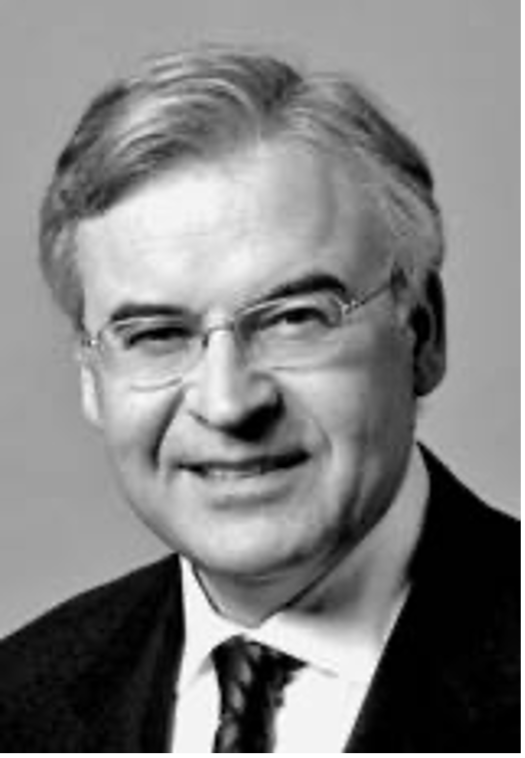
Hermann-Josef Lamberti, former Member of the Management Board, Deutsche Bank AG
I can highly recommend the Certified Financial Engineer program to derivatives practitioners and those who want to become one. I particularly liked the way of learning: not memorizing countless formulas, but understanding and applying them with practical examples. The professors’ passion for derivatives is evident in every video and text and is contagious. It is very well suited for working professionals, as everything can be done online. The quantitative skills I learned help me in my daily work to present even complex trading ideas visually and clearly and to make decisions promptly.
Cristian Lentfer, Certified Financial Engineer, Signal Iduna Asset Management GmbH
The Certified Financial Engineer program is ideally suited to improving your knowledge of derivative financial instruments. The sometimes complex financial-mathematical background is presented very clearly. I would particularly like to highlight the first-class support from the professors. You quickly notice that a great deal of effort and dedication has gone into the program.
Florian Göbel, Certified Financial Engineer, Frankfurt School of Finance.
The Certified Financial Engineer program provides comprehensive knowledge in the field of derivatives and thus makes a significant contribution to financial education in Germany. The accompanying teaching material guides you through the complex financial-mathematical subject matter in an understandable and clear way, making problem-solving enjoyable. The program is particularly recommended for young professionals, as its flexible design allows it to be completed alongside a job. The knowledge gained can therefore be applied not only directly in everyday professional life, but also in building private wealth.
Armin Hecktor, Certified Financial Engineer, HfWU
In terms of content, the Certified Financial Engineer exceeded my expectations by far. The practice-oriented teaching approach, which focuses on the relevant topics in the field of derivatives, provided significant added value for me. In the many books and other available media, the concrete application of relevant models is often presented in different ways. With the Certified Financial Engineer, I have now received clear guidance on the core topics in the field of derivatives.

Philip Hoffmann, Certified Financial Engineer
Alphacity Strategies
The Certified Financial Engineering program is one of the best learning experiences
I have ever had. It is a well-designed course with a strong
practical focus. I am very satisfied with the training offered by the European Institute of Quantitative Finance
. The training is based entirely
on industry projects and practical solutions to real problems. The
instructors are competent, have very strong industry knowledge, and
can identify students’ needs. The guidance provided
by the instructors was excellent, and the overall experience is
very good. If you want to optimize your technical skills, I personally
recommend participating in EIQF.
"The Certified Financial Engineer program offered by the European Institute of
Quantitative Finance (EIQF) was very useful in my case, as it is
well structured and takes the latest developments in this field into account.
It is among the best in the world and offers all participants an
excellent opportunity for theoretical and practical improvement."
The Certified Financial Engineer emphasizes the importance of knowledge within the financial world. The worldwide regulatory body cannot replace continuous education. It is the depth of the Certified Financial Engineer program that portrays a new picture to participants and sets a whole new standard for the financial community.
The Certified Financial Engineer program from the European Institute of Quantitative Finance is a practice-oriented qualification in the field of derivatives.
In terms of content, it covers valuation methods for options and futures (binomial model, Black-Scholes-Merton model) as well as different strategies (bullish, bearish, and neutral strategies). Thanks to a comprehensive course book, the content is easy to understand even without prior knowledge.
If you get stuck, the professors provide helpful support.
You are very flexible in terms of time, which means the course can also be completed alongside your job.
The course can be credited toward the MBA program.
This course is highly recommended for anyone who would like to further their education in derivatives.
I really enjoyed the Certified Financial Engineer program due to its practical application in Excel and the excellent transfer of knowledge it enabled. I was finally able to learn how to work effectively with derivatives expertise and create added value—whether for my clients or in my own trading in the markets. This was an excellent technical and practical complement to the Certified Financial Modeler. The teaching materials were of outstanding quality, offering valuable content both for those who prefer videos and for those who prefer the classic textbook. The implementation examples are true treasures for one’s personal repertoire, allowing you to refer back to them as a reference in the future. I also appreciated the deep financial-mathematical theory, which sharpens fundamental understanding. The investment in this program will certainly yield a high return!
I really enjoyed the Certified Financial Engineer program due to its practical application in Excel and the excellent transfer of knowledge it enabled. I was finally able to learn how to work effectively with derivatives expertise and create added value—whether for my clients or in my own trading in the markets. This was an excellent technical and practical complement to the Certified Financial Modeler. The teaching materials were of outstanding quality, offering valuable content both for those who prefer videos and for those who prefer the classic textbook. The implementation examples are true treasures for one’s personal repertoire, allowing you to refer back to them as a reference in the future. I also appreciated the deep financial-mathematical theory, which sharpens fundamental understanding. The investment in this program will certainly yield a high return!
The Certified Financial Engineer program is ideally suited to improving your knowledge of derivative financial instruments. The sometimes complex financial-mathematical background is presented very clearly. I would particularly like to highlight the first-class support from the professors. You quickly notice that a great deal of effort and dedication has gone into the program.
The Certified Financial Engineer program provides comprehensive knowledge in the field of derivatives and thus makes a significant contribution to financial education in Germany. The accompanying teaching material guides you through the complex financial-mathematical subject matter in an understandable and clear way, making problem-solving enjoyable. The program is particularly recommended for young professionals, as its flexible design allows it to be completed alongside a job. The knowledge gained can therefore be applied not only directly in everyday professional life, but also in building private wealth.
Financial Modeler
The Certified Financial Modeler program helps map quantitative and qualitative aspects of simple and complex financial issues in Excel & VBA-based modules. These modules are helpful for all experts in day-to-day business. The Certified Financial Modeler helps students, junior professionals, and senior professionals understand what is important and required in financial modeling and valuation.
Basel Omar Abu-Ali, MBA, CFC, CMA, Certified Financial Modeler, CVA, Financial Controller at Emirates International Investment Company (EIIC), Abu Dhabi, United Arab Emirates
The Certified Financial Modeler program enabled me to transfer business concepts and analytical methods into practice. By working effectively with the concepts, I was finally able to apply the theoretical know-how I had already learned during my studies in practice, which provided significant added value both for my professional work and for my personal interest in investing. In addition, the assignments were built up step by step and extremely close to the real world. The freedom provided in finding solutions, the support from both the always helpful contacts as well as videos and reading materials, promoted efficient, self-directed learning and the use of personal creativity in developing solutions. It was a lot of fun. In summary, I can say that I learned theoretical foundations very sustainably through practical application, and I particularly enjoyed it thanks to the freedom of design and creative scope.
Tobias Blüder, Certified Financial Modeler, Junior Consultant Banking Business, targens
The Certified Financial Modeler program links the complex world of corporate valuation with state-of-the-art theories and scientific findings in a very pragmatic way. Building on the knowledge from my bachelor’s and master’s studies in business administration and my practical work in business development, the program enabled me to deepen my knowledge in corporate valuation, structuring business plans, and portfolio optimization, and to train it in practical application examples. The two professors were always available for questions, which further enhanced learning success. Since I completed the program alongside my professional work, it was particularly important to me that I could work on the tasks flexibly—depending on the time available. Overall, my expectations were fully met, and I can recommend the program to all finance professionals.
Dennis Denuel, Certified Financial Modeler, ERGO
For those responsible in Investor Relations, the Certified Financial Modeler is an excellent opportunity to acquire and document knowledge in Financial Modeling.
Dr. Marc-Gregor Czaja, Institutional Equity Research, Equity Strategy, Landesbank BadenWürttemberg
The Certified Financial Modeler program provides me with a better and more focused understanding of complex financial topics. The Excel and VBA-based Certified Financial Modeler philosophy helps me structure almost any financial question and approach a solution.
Tobias Eiblmeier, Certified Financial Modeler Consultant, Portfolio Control
Certified Financial Modeler – The admission ticket to investment banking. I really must say: “The Certified Financial Modeler professionals are well prepared for their analyst and associate years in investment banking.”
Oliver Karpf, Kleinwort Benson, London
The training in the Certified Financial Modeler program imparts profound knowledge in the areas of Corporate Finance, Portfolio Management, and Derivatives. This knowledge is deepened and explained through self-study, using theoretical foundations and practical case studies. This structures the complex overall topic into manageable and comprehensible units. The insights and solutions can thus be directly applied to numerous practical issues.
Markus Hirschbichler, Certified Financial Modeler Akad. Finanzdienstleister / FAF-Absolvent Prokurist & Senior Consultant bei GFB Investment Services GmbH, Austria
The Certified Financial Modeler certification uses a practical and multi-stage case study to teach the most important tools for working with Excel-based financial models. By independently creating an integrated financial model, participants learn to translate theoretical knowledge into practice and acquire valuable skills for audience-appropriate model implementation and results presentation. Furthermore, the extensive additional material encourages participants to delve deeper into the topics of the basic textbook “Financial Modeling” beyond the scope of the Certified Financial Modeler program. The dedicated team of lecturers at EIQF also deserves special mention for their individual and prompt feedback. In corporate finance, working with increasingly large and complex data volumes is commonplace. Accordingly, conceptual and practical skills in financial modeling are important building blocks that should be mastered confidently today. The Certified Financial Modeler program is highly recommended for any professional who wants to sharpen these skills in using MS Excel and deals with corporate planning and business valuation daily.
Maximilian Irmer, Certified Financial Modeler, M&A | Corporate Finance Hannover GmbH
Through my studies in International Business Information Systems, I was able to gain initial experience in Excel and VBA modeling and apply these skills, which helped me as a career starter in controlling. I wanted to deepen my fundamental knowledge and expand my corporate finance skills with this advanced training. Regarding the content of the training, the materials provided as a basis are extremely informative, easy to understand, and highly applicable. Personally, I found the mathematical derivations for the individual questions highly interesting and helpful. The excellent structuring of the case study allowed me to divide the modules in a way that enabled me to easily combine the training with my full-time job. The continuous accessibility of all staff and the lightning-fast feedback after each submitted unit are particularly noteworthy. In summary, I can unreservedly recommend this course to anyone interested in business valuation and financial modeling.
Nico Harteman, Certified Financial Modeler, Associate, Prime Capital
Load more
The Certified Financial Modeler is recommended as advanced training for experienced bankers and financial analysts. The program’s strength lies in the direct applicability of acquired financial knowledge in investment practice.
Kristian Buric, CFA, Certified Financial Modeler, EUROGROUP CONSULTING
For the first time, central aspects of banking are not only discussed generally, but are also clearly presented step-by-step on a case-by-case basis. The Excel-based exercises accurately reflect the daily work of bankers.
Dr. Marc Coenenberg, Managing Director Corporate Finance Advisory, UniCredit
The combination of practically relevant theoretical knowledge and methodological skills in the Certified Financial Modeler supports me in optimally advising my clients.
Stephan Stegmayer, Certified Financial Modeler, Wealth Management Advisor, UniCredit Group
What I particularly liked about the Certified Financial Modeler program was: The connection between the theoretical foundations of the accompanying textbook “Financial Modeling” and a very clear and practically relevant case study The creation of a financial model from scratch in Excel, incorporating Financial Modeling standards consistently applied throughout the case studies The development of model structures through independent analytical thinking, leading to valuable modeling experience in Excel The professional and practice-oriented structuring of the case study with interlocking model structures Learning the methods and tools of company analysis, valuation, and modeling from a financial perspective through the use of MS Excel and VBA. The personal support from the leading professors The expansion of my previously acquired financial knowledge The Certified Financial Modeler is a demanding and highly recommended advanced training for all finance professionals, offering an excellent continuing education concept for all financial industry questions.
Oguzhan Kösek, Certified Financial Modeler, Portfolio Manager, Deutsche Apotheker- und Ärztebank eG
I recommend the Certified Financial Modeler course to anyone who wants to deepen or acquire practical, Excel- and VBA-based knowledge in investment, corporate planning, financing, and valuation. The course is very well structured. With the help of the accompanying book “Financial Modeling,” the theoretical foundations are first laid. Through practical exercises in the toolbox modules and the case study, one learns to apply the instruments and standards for creating financial models based on the knowledge from the book, and to optimize calculations using the presented formulas. Furthermore, the course helps participants to better structure financial models and make them more user-friendly. I particularly liked the opportunity to work through the extensive learning material alongside my job. Self-study at one’s own pace, without significant time pressure and with quick feedback on any questions, ensures better learning and retention of course content, development of analytical thinking, and thus, of course, prompt “aha” moments in daily professional life.
Yekaterina Litvin, Certified Financial Modeler, eureos corporate finance gmbh
The Certified Financial Modeler was exactly what I needed. The practical examples enabled a very good implementation of theory into practice. The program shows step-by-step how all complex financial topics can be structured and professionally solved with the help of a financial model. This allowed me to quickly and successfully apply the acquired know-how in my daily work without any problems. In my opinion, the Certified Financial Modeler is a must-have for Investment Analysts, Associates, and Corporate/Project Finance Professionals. I can unreservedly recommend the certificate course.
Shavkat Mamatkulov, Certified Financial Modeler, Associate, Capcora GmbH, Frankfurt am Main
“The Certified Financial Modeler qualification program enables candidates to systematically learn and practically apply key aspects relevant to business valuation. Thanks to excellent support throughout the entire program, the hurdles of corporate finance can be successfully overcome.”
Leon Mitsch, Certified Financial Modeler, Aon plc
The Certified Financial Modeler links theoretical expertise with practically relevant and illustrative examples, offering an excellent opportunity to refresh existing knowledge and expand it with new content. The textbook “Financial Modeling” guides the reader purposefully and easily through the topics of Excel, VBA, Corporate Finance, Portfolio Management, and Derivatives, and can support the user in daily tasks with its modular structure.
Philipp Noack, Certified Financial Modeler, IMAP M&A Consultants
The “Certified Financial Modeler” program offers an excellent opportunity to refresh and specifically expand theoretical knowledge in Corporate Finance, Portfolio Management, and Derivatives. The basic textbook “Financial Modeling” is vividly complemented by practical Excel and VBA modeling examples in the Toolbox. Due to the practice-oriented approach, the acquired know-how can be easily applied in daily professional life.
Catharina Peters, Certified Financial Modeler, IMAP M&A Consultants
The Certified Financial Modeler program is the perfect overview of the world of financial modeling. Based on very well-structured tasks, the Financial Modeler is guided through the case study – accompanied by a comprehensive reference work in the provided book. The tasks build upon each other and ultimately, when all threads come together, provide a clear view of the self-created financial model. During the course, the Financial Modeler learns the methods and tools of company analysis, valuation, and modeling from a financial perspective. Anyone interested in capital market topics and company valuation, and who enjoys Excel, is very well advised with this course!
Felix Schlude, Certified Financial Modeler, Project Manager LBBW
The Certified Financial Modeler not only combines technical competencies in Corporate Finance, Portfolio Management, and Derivatives, but also trains the use of Excel and Visual Basic. It pursues a practice-oriented approach that allows the content to be integrated seamlessly into daily professional life. In addition, the program promotes a structured and analytical approach to dealing with complex and intricate problem areas.
Fabian Finger, Certified Financial Modeler, Project Manager Corporates and Investment Banking, UniCredit Bank
The Certified Financial Modeler offers practical, understandable, and goal-oriented knowledge. Graduates can professionally, logically, and consistently create financial models with varying degrees of detail, always aiming for a well-founded and consistent conclusion. The course materials are comprehensive and modular, making them a valuable support in daily work.
Marc Voser, Certified Financial Modeler, Aretas Capital Management AG, Zurich
By solving practice-oriented case studies in preparation for the Certified Financial Modeler, candidates develop a fundamental routine for solving financial problems. This acquired modeling competence is particularly important in the private equity business for valuing companies and developing investment and transaction structures.
Thomas Lindemann, EMBA, Certified Financial Modeler, Süd Beteiligungen
Financial Modeling is essential for valuation practice – the Certified Financial Modeler is therefore particularly recommended as professional training for Corporate Finance and Portfolio Management. The modules enable participants to delve into complex financial theoretical topics and directly apply what they have learned by setting up practically relevant financial models.
Marvin Müller, Certified Financial Modeler, Student Trainee BHF-BANK
Our M&A experts need excellent financial modeling skills. Global M&A spreadsheet standards are essential to establish a common ground to successfully negotiate assumptions. This book offers it all to the certified financial modeler candidate.
Dirk Pahlke, Rothschild, Head of M&A Germany
The Certified Financial Modeler qualification offers an excellent combination of theoretical expertise and practical application in Corporate Finance, Portfolio Management, Financing Accounting, and Derivatives, and in my opinion, represents a key qualification in the financial industry. Above all, the practical relevance through a “real” case to be worked on, combined with self-study theory, convinced me. The case study also makes it possible to expand one’s Excel and VBA knowledge with relevant skills. The support from EIQF was excellent. I can recommend the Certified Financial Modeler to anyone who wants to kickstart their career in the financial industry.
Philipp Fischer, Certified Financial Modeler, Relationship Management – Media and Entertainment Banking, DZ Bank AG
The Certified Financial Modeler provides advanced Excel and VBA solutions for financial questions. The division into five modules allows participants to first familiarize themselves with the software basics before delving deeper into creating models in various financial application areas. The course character, structured setup, and practical examples and workshops of the Certified Financial Modeler enable quick and consistently interactive learning of the subject matter.
Christian Glöckler, Certified Financial Modeler
Financial Modeling is an indispensable tool for practitioners to transform complex issues (such as planning, business case creation, valuation topics) into a transparent and structured form. Especially against the background of steadily increasing complexity in the banking world, Financial Modeling skills support the user in the necessary abstraction process.
Philipp Güth, Certified Financial Modeler, Finance Manager GTB TFCMC Europe, Deutsche Bank AG
By solving practice-oriented case studies in preparation for the Certified Financial Modeler, candidates develop a fundamental routine for solving financial problems. This acquired modeling competence is particularly important in the private equity business for valuing companies and developing investment and transaction structures.
Thomas Lindemann, EMBA, Certified Financial Modeler, Süd Beteiligungen
Financial Modeling is essential for valuation practice – the Certified Financial Modeler is therefore particularly recommended as professional training for Corporate Finance and Portfolio Management. The modules enable participants to delve into complex financial theoretical topics and directly apply what they have learned by setting up practically relevant financial models
Marvin Müller, Certified Financial Modeler, Student Trainee BHF-BANK
Our M&A experts need excellent financial modeling skills. Global M&A spreadsheet standards are essential to establish a common ground to successfully negotiate assumptions. This book offers it all to the certified financial modeler candidate.
Dirk Pahlke, Rothschild, Head of M&A Germany
Having structured and expanded Financial Modeling processes through the Certified Financial Modeler program helped me successfully enter the Private Equity industry.
Eduard Reder, Certified Financial Modeler, DZ Equity Partner
The Certified Financial Modeler provides the ideal foundation for the ongoing digitalization of banks. Through its extensive applications in Excel, all economic questions can be modeled computer-based. The acquired, profound, and deepened knowledge enables the creation of digital solutions and makes a decisive contribution to the bank.
Markus Riedl, Certified Financial Modeler, HypoVereinsbank
The Certified Financial Modeler has enriched me personally and professionally. I have learned how multifaceted the field of Corporate Finance truly is. The course has very successfully bridged the gap between capital markets and corporate finance. It is an enrichment for every practitioner, as the topics become even more understandable with Excel than by simply memorizing formulas.
Tino Rietz, Certified Financial Modeler, Universal Investment, Distribution & Accumulation
The Certified Financial Modeler provides a broad theoretical knowledge of the relationships and processes in company valuation. The underlying case study is characterized by a clear and logical structure. The tasks given there reflect the contents of the book and gradually lead to a comprehensive model. This clearly demonstrates the strong practical orientation. The acquired skills have already proven valuable in many professional questions and have significantly contributed to the creation of models with excellent structure and usability.
Simon Schmitz, Certified Financial Modeler, Dual Student, Wealth Management Equity & Debt Advisory, UniCredit Bank AG
The Certified Financial Modeler excellently combines theory and practice in all relevant finance areas. The practice-oriented examples enable a very good implementation in practice. Graduates can thus build up or expand relevant know-how and simultaneously document it through a demanding examination.
Dirk Schütte, Certified Financial Modeler, Diplom Betriebswirt, CCrA, Senior Relationship Manager, Corporate Banking, Bremer Landesbank.
The combination of theory and real life application, embodied in the curriculum of the Certified Financial Modeler, makes the program a comprehensive and invaluable utensil for everyone attempting to understand finance.”
Maximilian Sfetcu, Merrill Lynch, New York
In addition to fundamental Excel / VBA know-how, the Certified Financial Modeler training imparts profound knowledge in the financial mathematical areas of Corporate Finance, Portfolio Management, and Derivatives. The illustrative, practical modeling examples in the Toolbox perfectly complement the theoretical learning content of the book and motivate one to optimally apply them in a similar or slightly modified form in daily professional life.
Christian Spieler, Portfolio Analyst, IDS GmbH – Analysis and Reporting Services
The Certified Financial Modeler is a very practice-oriented continuing education program that teaches the creation and application of holistic, fully integrated, and computer-supported financial models in a structured and conceptual manner. With the support of a fully interconnected financial model built on this course, all questions in the areas of Corporate Banking, Corporate Finance, and Valuation can be answered, and changes in decision-relevant parameters can be quickly adapted and mapped. Understanding the impact of changes in the most essential valuation parameters is crucial and enables the certificate holder to provide real added value in negotiations and discussions with internal and external clients in Switzerland. The “Professional Excellence” path was exactly the right one for me, as it represents the perfect part-time continuing education in the Swiss M&A market and modularly combines theoretical knowledge and practical relevance. The course leaders were always available. Their suggestions greatly helped me create an integrated valuation model at a high academic level and with high practical relevance at the same time.
Rafael Szucs, Certified Financial Modeler, Junior Corporate Client Advisor, Bank für Tirol und Vorarlberg
For my private equity fund project, I compared the content and structure of various Certified Financial Modeler online courses from different providers on the internet. EIQF’s offering convinced me the most. The content was well-structured, making the tasks understandable and easily solvable. The EIQF team responded very promptly, allowing me to maintain my work rhythm and motivation. In summary, I thank the EIQF team for the excellent cooperation and can highly recommend this course.
Tadios Tewolde, Certified Financial Modeler, Ambessa Capital
From theory to practice! While some content may be familiar from university days, translating topics into practice is still a challenge that needs to be mastered. Through the close guidance of the professors and the case study, complex challenges are clearly and structuredly transferred into practice, through which one learns the craft of a Financial Modeler. Furthermore, the advanced training to become a “Certified Financial Modeler” stands out due to the required independence – you continue your education wherever and whenever you want at your own pace. Especially in controlling, a confident handling of Excel & VBA is essential. This is where the advanced training comes in and imparts knowledge – suitable for beginners to professionals. All in all, this is a thoroughly successful advanced training that covers many facets of finance and does not just scratch the surface of the topics, but goes in-depth to paint the “big picture” – and not just in theory!
Jascha Trares, Certified Financial Modeler, Controlling Officer, ING-DiBa AG
In my opinion, the Financial Modeler is the key qualification for investment professionals in the real estate industry. Due to the ongoing professionalization and internationalization of the sector, there is no way around Excel-based financial models for real estate valuation in professional practice. To present this clearly, structured, and understandably for third parties, financial modeling skills are indispensable. This is precisely where the Certified Financial Modeler comes in decisively and provides the perfect additional qualification to succeed in the real estate industry. The structure of the Certified Financial Modeler, combining self-study, financial market-relevant content, and the development of practice-oriented case studies, is, in my opinion, very well done. The extensive teaching material leaves hardly any points open and is the perfect reference work for professional life. Through the Certified Financial Modeler course, I was able to significantly expand my knowledge in various areas of Corporate Finance and my modeling skills.
Nikolai Wolanyk, Certified Financial Modeler, BNP Paribas Real Estate Consult
The Certified Financial Modeler program guides students through the world of financial modeling; the tasks are always clearly formulated and bundled into manageable packages. Additionally, there is extensive supporting material, in the form of smaller exercises or specified chapters from the book “Financial Modeling.” This allows for flexible and individual time management, which makes the Certified Financial Modeler program particularly attractive for students and professionals. For any questions, there is quick and precise feedback from the professors via email. After completing the course, one not only has a clear picture of financial modeling in the areas of company valuation, financing, portfolio valuation, etc., but also initial practical experience and a large toolbox for future financial modeling tasks. Anyone interested in capital market topics and who enjoys MS Excel is more than well served by this course.
Alexander Walter , Certified Financial Modeler, LBBW (Capital Markets (Front Arena) Division)
What I particularly like about the Certified Financial Modeler training is its practical relevance. This allows the learned skills to be quickly applied in investment analysis and portfolio management in daily work. The skills taught contribute significantly to increasing work efficiency in these areas.
Sven Tyrchan, Certified Financial Modeler, Reichmuth & Co Investmentfonds AG
The Certified Financial Modeler is a training program ideally suited for analysts at banks and investment banks.
Dr. Hendrik Wolff, Wolff & Häcker Finanzconsulting AG
The Financial Modeler course is a great combination of theory and practice. It should be mandatory for anyone who wants to start a career in Corporate Finance! The combination of textbook + Excel example files + videos as teaching material is particularly noteworthy.
Tina Umbach, Certified Financial Modeler, Partner, TAP M&A, Munich
In my opinion, the Certified Financial Modeler training pursues a very practical approach and, through its modular structure, offers a guided path to a fully integrated Excel-based financial model for company valuation. Within the framework of the training, experienced as well as inexperienced users can build up or further develop their competencies in the areas of Corporate Finance, Portfolio Management, and Financing Accounting, as well as their practical implementation in Excel. The course structure is very structured and can be carried out independently with the given learning materials. Feedback on the created analyses and models is provided very quickly and in a supportive manner by the supervisors.
Fränk Wolf, Certified Financial Modeler, Asset Management Alternatives, Golding Capital Partners
With a practical and user-oriented approach, the Certified Financial Modeler provides the necessary financial modeling toolkit that a consultant needs in a complex and dynamic corporate environment. This not only increases work efficiency but also maximizes customer value.
Dragan Zagorac, Certified Financial Modeler
Helbling Business Advisors AG, Zurich
Consultant Turnaround Management / M&A
When I enrolled in the “Certified Financial Modeler” course, I expected to receive a basic introduction to financial modeling. However, these expectations were far exceeded. We worked with advanced models from the beginning, and I was able to apply them to self-selected companies. The quality of the learning materials was excellent, and the combination of videos and texts made learning enjoyable and efficient. The opportunity to build my own model during the course and calculate it all the way to company value and purchase price particularly impressed me. In this way, a holistic understanding was conveyed, which is rarely found in theory. What truly distinguishes the Certified Financial Modeler is its practical relevance. I can now apply the learned fundamentals in my work at a startup, especially in creating a business plan and determining our company’s value. I would definitely recommend the course, especially for individuals who are active in or want to enter investment banking, M&A, or startup finance. The Certified Financial Modeler prepares you excellently and offers intensive, practical, and demanding training that goes beyond the usual. For me, it was a worthwhile step in my academic journey, and I am convinced that it will be for many others as well.

Tim Gerwens, Certified Financial Modeler, Zentru.io
For me, Financial Modeling means processing complex tasks abstractly and structurally. In practice, this allows challenging financial topics in company analysis and valuation to be solved and made understandable for others. The Certified Financial Modeler offers a comprehensive toolkit for this. Through a targeted and well-thought-out learning concept, it prepares for all requirements in the field of Corporate Finance.

Tobias Grüner, Certified Financial Modeler, Bosch Rexroth AG
The Certified Modeler included strategies, standards, and tools to successfully and efficiently transfer my theoretical and practical knowledge in finance, acquired over the years, into models. The training covers a wide range of topics, such as Corporate Finance, Company Valuation, Portfolio Management, and Fixed Income Instruments.
Throughout the entire training process, the supervisors were very dedicated and provided support with their outstanding knowledge in finance and financial modeling. The flexible structure of the training made it possible to adapt it to professional needs.
I can recommend the Certified Financial Modeler qualification to anyone who wants to take their finance and modeling skills to a higher level.
Oscar Hernando Carrillo CVA, Certified Financial Modeler, Siemens Financial Services, Equity Finance
The Certified Financial Modeler directly translates theoretical knowledge into daily work and supports the understanding of individual topics with very clearly prepared documents and Excel tools. It shows what possibilities Excel and embedded VBA programming offer to solve questions in company valuation, portfolio management, and derivatives. A successful mix of theoretical foundations and practical implementation!
Paul Hörnicke, Certified Financial Modeler, Investment Analysis Specialist, GAZPROM Germania
The Certified Financial Modeler is very interesting, informative, and practical. The certificate course is also ideal in conjunction with studies, as the acquired ECTS can be submitted to colleges and universities for recognition. The recognition process after receiving the Certified Financial Modeler certificate went smoothly and without problems.

Witali Krebs, Certified Financial Modeler, Senior Finance Controller, FTI Touristik
As an investment manager, it is my responsibility to evaluate companies in the context of M&A activities. To further deepen my skills in this area, I decided to pursue part-time training as a “Certified Financial Modeler” at the European Institute of Quantitative Finance (EIQF). I would like to explicitly thank Prof. Joachim Häcker and Prof. Dietmar Ernst for their excellent support, well-founded answers, and detailed explanations to follow-up questions. The structuring of the content was first-class and covered a broad spectrum, from balance sheet analysis and cash flow considerations to portfolio structuring. The Financial Modeling videos were particularly helpful, as they were not only easy to understand but also helped to solve complex tasks and develop a deep understanding. I can recommend this course to anyone who wants to acquire or deepen sound knowledge in Financial Modeling. Given that “digitalization and new business models are disrupting the ‘Old Economy’,” I am now considering continuing my education by pursuing an MBA.

Daniel Künstler, Certified Financial Modeler, EP Power Minerals
As a scholarship holder of the European Institute of Quantitative Finance (EIQF), I participated in the Certified Financial Modeler training. Since the Excel models were created from scratch, I was able to develop a very good understanding of existing relationships. I found the identical results modeling of the DCF methods particularly exciting. I was able to expand my existing financial modeling knowledge and acquire new knowledge. The EIQF team also supported me at all times.”

Harun Kurucu, Lidl Stiftung & CO. KG
The Certified Financial Modeler is a didactically excellent continuing education concept, especially for experienced professionals. Corporate Finance theory is made tangible through a real-world case using Excel. The holistic view of the case study, but especially the connection between specialist literature, Excel examples, videos, and control questions, are very well coordinated. The extremely fast response time of the course directors to individual inquiries is particularly noteworthy. A genuine recommendation for all Corporate Finance professionals.

Christian Lutz, Certified Financial Modeler, Partner DUKAP Financial Advisory, Stuttgart
The Certified Financial Modeler offers a very clearly structured program with a balanced mix of theoretical knowledge and practical relevance. Already during preparation, I noticed that the acquired knowledge provides added value for my daily work as a consultant. In addition to the technical modeling skills, the Corporate Finance module with a focus on company valuation was also of great interest to me.

Kevin Prinz, Certified Financial Modeler, Roland Berger
The Certified Financial Modeler training is very well structured, and I found my way around very well. The modules build logically upon each other and ensure that one can quickly internalize them – in my case, through re-modeling. I decided to pursue the Certified Financial Modeler training because I realized that the theoretical knowledge from my studies only gave me an incomplete view of this world. The Certified Financial Modeler laid the foundation for me to delve deeper into the modeling of financial issues. From this foundation, a passion has grown that has significantly shaped me regarding my career choice and my practical experiences.

Christoph Weyer, Certified Financial Modeler
Consultant, Partake Consulting
The Certified Financial Modeler imparts sound Financial Modeling and Excel know-how, which is often insufficiently available, especially in medium-sized companies. Financial models – regardless of their size – are often intransparent and difficult for third parties to understand. This not only complicates daily work but also project-related tasks, for example, in the context of a company transaction. In addition to modeling specific financial topics, the Certified Financial Modeler also covers methodologies for the general setup and development of models in Excel. The latter is essential for any Excel-based model – whether for creating a simple calculation or for mapping an integrated financial plan across several companies.

Katharina Hirning, Certified Financial Modeler, Consultant, Helbling Business Advisors, Munich
Sound financial modeling knowledge is particularly important for the controlling area. The Certified Financial Modeler provides both the theoretical foundations and their practical implementation.
Bernhard Moosburger, Certified Financial Modeler, Period Controller, BMW AG
Load more
The Certified Financial Modeler combines theoretical expertise in corporate finance with practical examples and is an excellent opportunity to learn and subsequently certify the increasingly important know-how in financial modeling.
Felix Nunninger, Certified Financial Modeler, Treasury, BMW Group
Through professional development as a Certified Financial Modeler, corporate finance professionals gain practical insight into financial modeling with Excel. The practical relevance helps to directly implement the acquired know-how in everyday work. Particularly noteworthy is the intensive support from the program directors when questions arise. Overall, the professional development program was a great and educational experience.

Lukas Schmid, Certified Financial Modeler, Porsche AG
For me as a management consultant in the renewable energy sector, financial modeling is an essential component of every project, business plan, and financing initiative. The Certified Financial Modeler program combines theory and practice in a very implementation-oriented way and imparts important Excel skills for reviewing, modeling, and graphically presenting complex financial models. The Certified Financial Modeler is thus able to create complex integrated financial models and perform company valuations—which are naturally also necessary in the renewable energy sector.
Christoph Schweizer, Certified Financial Modeler, Sterr-Kölln & Partner
Certified Financial Modeler – the ideal professional development program for controllers

Dominik Vipic, Certified Financial Modeler,Head of Controlling, Method Park Holding Alexander Wendland
Within the Certified Financial Modeler program, finance and risk management theory is applied very practically. The program gave me an excellent opportunity to expand existing corporate finance and risk management knowledge. With the help of Excel, all required business questions can be modeled.
Alexander Wendland, Certified Financial Modeler, FRM, CCrA
Risk Management, ARTE Bunkering
The Certified Financial Modeler program offers a good opportunity to expand and structure theoretical financial modeling knowledge. Through a practice-oriented approach, the acquired know-how can also be easily applied in everyday work.

Jan Wojdyla, Certified Financial Modeler, Ebner Stolz Management Consultants GmbH
There is an interaction between company valuation and the company purchase agreement, as both distribute opportunities and risks between the parties. Errors often arise in the contract or in the company valuation when they do not mirror each other. Therefore, a good understanding of financial models, which is conveyed in the book and tested in the examination, is very important for corporate lawyers who handle company acquisitions. The above applies even more strongly to options. According to modern understanding, many contractual arrangements amount to options and must be valued as such.

Dr. Christopher C. King, Certified Financial Modeler, (Attorney in Berlin, Attorney-at-Law in New York, Solicitor of the Supreme Court of England & Wales, EU Attorney, Bern), Head of Legal Department at Hunter Douglas N.V., Rotterdam & Lucerne
Especially in times when the international economy and specifically the international financial markets are becoming increasingly important and complex, law students urgently need targeted professional development in financial modeling. An economic understanding and the ability to interpret financial models is a hiring criterion at various international business law firms. The certificate program by Professors Häcker and Ernst addresses precisely this gap and specifically imparts the most central skills in the areas of corporate finance, investment and financing, derivatives, and portfolio management.
Julius Rübartsch, Certified Financial Modeler
The “Certified Financial Modeler” training helps lawyers speak the language of banks in complex financial transactions.
Dr. Andreas Müller-Driver, LL.M., SKW Schwarz Rechtsanwälte
The Certified Financial Modeler program helps in daily work to clearly structure complex questions from the financial and business world, thereby developing user-friendly and practical solutions. In addition to technical knowledge about derivatives, portfolio management, and corporate finance, the necessary know-how is conveyed through Excel and VBA applications as well as general problem-solving competencies. All these areas are essential for all companies today. Therefore, in my opinion, the Certified Financial Modeler is relevant not only for companies in the financial sector but for all companies and industries. In addition to the knowledge conveyed in the book, the supplementary Excel sample models and the toolbox provide good preparation for the examination as well as assistance for practical approaches.

Benjamin Schilling, M.A., Certified Financial Modeler, Business Administration Department of Nickert Law Firm, Offenburg
Particularly the methodological component makes the ‘Certified Financial Modeler’ so valuable compared to other certifications, which sometimes focus only on theoretical content. The structured presentation of the learning content—both in the book and in the accompanying materials—illustrates the complex subject area in an impressive way. Of great value are also the Excel/VBA-based tools that can be accessed in the login area of the ‘Center for Financial Modeling.’
Daniel Altmann, Certified Financial Modeler, EY
The professional development as a “Certified Financial Modeler” enabled me to specifically transfer theoretical expertise in the areas of corporate finance, M&A, and portfolio management into practice-oriented and professional Excel modeling solutions. I particularly appreciated the practical relevance of the case study in combination with the excellent support. Fundamentally, I would recommend this qualification to anyone, regardless of academic background, who wants to take their analysis and modeling skills to the next level.

Christian Böhm, Certified Financial Modeler, KPMG
The Certified Financial Modeler offers comprehensive professional development in corporate finance. With the help of the learning materials, complex models can be developed in a structured manner. Particularly noteworthy is the high practical relevance as well as the imparting of advanced knowledge in Excel and VBA.

Michael Burger, Certified Financial Modeler, EY
The content of the Certified Financial Modeler is versatile in audit and consulting practice. Through the modular structure of the case study, I was able to work flexibly on the solutions alongside my work and thus acquire valuable knowledge in various areas (Excel, portfolio management, or corporate finance). The high practical relevance as well as the quick exchange with Prof. Häcker and Prof. Ernst are also noteworthy.
Sebastian Domröse, Certified Financial Modeler, EY
From my perspective, the Certified Financial Modeler offers a kind of toolbox that enables me to better master my daily tasks. One receives financial expertise and methodological competence in the form of practice-relevant knowledge for working with Excel and VBA. With the help of the book as well as the Certified Financial Modeler Excel toolbox including the practice exams, it is easily possible to prepare independently for the examination. In addition, the directors of EIQF are available at short notice with assistance via email.
Michael Gröger, Certified Financial Modeler, Senior Consultant, FSO Advisory, EY
The Certified Financial Modeler is excellent for financial modeling in company valuation, and is also ideal as a supplement to the tax advisor and auditor examinations.
Florian Gruhler, PricewaterhouseCoopers
Through the Certified Financial Modeler, financial tasks are conveyed in an easily understandable and structured manner using Excel-based models. The content is practice-oriented and thereby facilitates work in everyday professional life.
Gina Kristin Joas, Certified Financial Modeler, Ebner Stolz
Already during preparation, I was able to apply components of the Certified Financial Modeler (such as VBA programming) in practice. This demonstrates the high practical relevance of the Certified Financial Modeler. I would also like to highlight the outstanding collaboration with EIQF. Through the consistently friendly communication with the institute, the preparation phase was particularly enjoyable.

Stefan Köck, Certified Financial Modeler, Ernst & Young, Audit
Already during preparation, I was able to apply components of the Certified Financial Modeler (such as VBA programming) in practice. This demonstrates the high practical relevance of the Certified Financial Modeler. I would also like to highlight the outstanding collaboration with EIQF. Through the consistently friendly communication with the institute, the preparation phase was particularly enjoyable.

Lukas Peller, Certified Financial Modeler, EY
Load more
The Certified Financial Modeler training conveys in an understandable and well-structured manner how financial tasks can be solved using Excel and VBA. Specifically, the focus areas of corporate finance (especially company valuation), portfolio management, and derivatives (especially option valuation) are presented in a practical and very clear way.
Matthias Kohlhaus, Certified Financial Modeler, Transactions – PwC Advisory Services
The course for obtaining the title “Certified Financial Modeler” is an excellently balanced course of theoretical knowledge and practical application. On the one hand, it reviews content from university studies, but also provides new insights into topics that were underrepresented even in my classical finance degree program. The course is suitable for students, career starters, and professionals alike. The good support and constant availability of the founders of the “Certified Financial Modeler” perfectly round out the course.

Donald Martin, Certified Financial Modeler, Mazars GmbH & Co. KG, Hamburg
The Certified Financial Modeler teaches sound expertise from various subject areas and additionally imparts professional handling of Excel. Especially the latter is indispensable in the finance environment today.
Markus Petzel, Certified Financial Modeler, KPMG
The Certified Financial Modeler program imparts practice-oriented Excel modeling and VBA skills for the efficient solution of financial questions.

Philipp Sorn, Certified Financial Modeler, Ebner Stolz
The Certified Financial Modeler refreshed and deepened my finance knowledge and linked it very well with my daily work through practical guidance. I was particularly impressed by the numerous tips and tricks as well as the structural working method with Excel and VBA, which helped me achieve a more efficient way of working.

Mate Vilic, Certified Financial Modeler, Advisory Services, EY
The creation or review of company valuations in the context of fairness opinions, the conclusion of domination and profit transfer agreements, as well as other corporate restructurings such as conversions or squeeze-outs are among the most exciting and simultaneously demanding disciplines in the corporate finance departments of auditing firms. Especially for career starters, the practice-oriented training as a Certified Financial Modeler provides the ideal toolkit, which is often neglected in “training-on-the-job.” In this way, high-quality consulting services to clients are ensured in the long term.
Robert Voith, Certified Financial Modeler, Assurance & Financial Advisory, Ebner Stolz
The Certified Financial Modeler program conveyed to me in a structured and clear manner how complex financial matters can be analyzed and prepared based on professional Excel-based models. Since the Certified Financial Modeler program explains a structured approach to solving complex financial matters, the acquired financial modeling know-how can be directly applied in professional practice.
Philipp Altschwager, Certified Financial Modeler, Ebner Stolz
This book provides practical advice in an increasingly complex financial world. Financial models structure financial action and thereby make it more effective, understandable, and ultimately also more cost-efficient. The authors succeed in not only providing helpful standards to the interested reader but also giving clear examples and steps for developing a model that meets their individual needs. Thus, the book supports our own goal of creating a better working world: When business works better, the world works better.
Hubert Barth, CEO of EY Germany
The qualification program for “Certified Financial Modeler” combines in a didactically elegant way theory and practice around the topic area “Financial Modeling.” The program facilitates the career entry for university graduates, but also presents new ideas and approaches in the context of modeling-specific questions in a solution-oriented manner.
Markus Beckmann, Certified Financial Modeler, Senior Manager, KPMG AG Wirtschaftsprüfungsgesellschaft, Deal Advisory, Financial Modelling
The Certified Financial Modeler program conveys in practical and understandable examples how financial questions and problems can be solved with technical solutions based on Excel and VBA. The program is therefore suitable both as a valuable introduction to the world of financial modeling and for experienced practitioners to expand their knowledge in this area.
Melanie Böcker, Certified Financial Modeler, Assistant Manager, Transaction & Restructuring, Business Modelling Group, KPMG AG
The Certified Financial Modeler conveys very clearly and in a practice-oriented manner how professional Excel-based models can be developed for solving complex financial tasks. The acquired financial modeling know-how thus also forms a valuable foundation for the practice of company valuation by auditors.
WP Stefan Brockmann, CFA, Certified Financial Modeler PricewaterhouseCoopers
An understanding of the quantification of financial questions is also very important for tax advisors and auditors. The Certified Financial Modeler concept conveys the necessary knowledge in an excellent manner.
Dr. Alexandra Coenenberg, Tax Advisor, Manager, Financial Services Tax,
KPMG AG
The philosophy of the Certified Financial Modeler is so far unique in Europe. While other programs convey rather abstract content with textbook character, this one addresses questions from financial practice.
Jens Diehlmann, Partner, Global Automotive Finance Leader | Advisory | EMEIA Financial Services Ernst & Young GmbH Wirtschaftsprüfungsgesellschaft
EIQF offers practice-oriented professional development with the Certified Financial Modeler. Selected employees of Ebner Stolz Mönning Bachem can complete this training. The goal is to deepen application knowledge in the areas of finance and controlling with software support and to be able to prepare subject-specific questions in a structured manner.
Michael Euchner, Partner, Ebner Stolz
Financial modeling or skillful handling of EXCEL and VBA is nowadays an indispensable prerequisite in many finance-related jobs. My intensive preparation for the Certified Financial Modeler gave me a very practical introduction to the world of programming, on which I build today, and which enables me to model complex questions with large data sets realistically and time-efficiently.
Matthias Gabrisch, Certified Financial Modeler, Treasury officer, Deloitte Belgium – Enterprise Risk Services
The “Professional Excellence” path of the Certified Financial Modeler course not only conveys the current theoretical toolkit for creating integrated planning calculations and company valuations. Upon completing the course, participants have also developed their personal modeling tools, tested on real cases and evaluated by two renowned experts, which can be directly applied in consulting practice.

Stefan Güssow, Wirtschaftsprüfer, Steuerberater, Certified Financial Modeler, Independent Transaction Advisor
The Certified Financial Modeler is structured in a practice- and application-oriented manner. All questions in the curriculum are supported by clear examples in Excel, which thus provide a very good introduction to the respective subject matter. The acquired knowledge could be directly implemented, particularly in the area of modeling integrated corporate planning, to increase the quality of the models.
Mirko Menzel, CIIA, Certified Financial Modeler, FAHRNI & PARTNER
The Certified Financial Modeler helps me in my daily work. Through the Certified Financial Modeler, I can approach the challenges of financial modeling in a more systematic way than before. During the Certified Financial Modeler exam preparation, the conception of the Certified Financial Modeler proved to be excellent. For example, I was able to use the Excel toolbox with numerous sample questions very well and create practice exams from them. I then tried to solve these within the given time. The directors of EIQF also immediately addressed my questions, so that the preparation went smoothly.

Jakob Plieninger, Certified Financial Modeler, Senior in Transaction Advisory, Ernst & Young, Muscat – Sultanate of Oman
Extensive topics from the financial areas of corporate finance, portfolio management, and derivatives can be processed and presented in a more structured manner with the help of the “Certified Financial Modeler” program. The program also serves well for refreshing subject areas that do not determine the daily work environment.

Martin Vennedey, Certified Financial Modeler, Consultant, Private Finance – Asset Controlling, Warth & Klein Grant Thornton AG
Working on the case study helped me fundamentally understand financial models. Through the bottom-up approach, the structure of a model can be very well comprehended. In addition, the processing requires clean and structured work with Excel, which is indispensable in everyday work. The Certified Financial Modeler therefore offers great added value, especially for career starters in corporate finance.

Josua Weberruss, Certified Financial Modeler, Bansbach
The case study of the Certified Financial Modeler conveys step-by-step and in a structured manner a variety of methods in corporate finance from a transaction-related perspective. The high practical relevance stands out, so that the bridge between theory and practice is built through the imparting of Excel-based financial modeling skills. The program is ideally suited particularly for university graduates and professionals in their first years of work to deepen their corporate finance knowledge in a practice-oriented way. Particularly pleasant is that the case study can be completed at an individual pace.

Dmitry Zaikin, Certified Financial Modeler, Transaction Advisory, RSM Ebner Stolz
The “Certified Financial Modeler” far exceeded my expectations and is undoubtedly one of the most rewarding steps on my academic path. The quality of the course content was excellent. The instructors are highly qualified experts with extensive experience in the financial industry who pass on their knowledge in an interesting and professional manner. I found the practical relevance particularly positive. From the beginning, the focus was on applying the learned knowledge in a real scenario. This allowed me not only to deepen my understanding but also to learn how to effectively use financial models for decision-making in M&A transactions. Overall, I can unreservedly recommend the “Certified Financial Modeler.” The course offers intensive, practice-oriented, and demanding training that optimally prepares for the high demands in investment banking and M&A-related business areas.

Moritz Aichner, Certified Financial Modeler, Munich University of Applied Sciences
After successfully completing the professional development as a Certified Financial Modeler, one is able to efficiently solve problems from the areas of corporate finance, portfolio management, and derivatives with Excel and VBA. In addition to the added value on a professional level, the program also offers great added value for private investment. A Certified Financial Modeler can determine the fair value of a stock with a financial model without great effort or calculate the return and risk of an ETF portfolio.

Sinan Aydogan, Certified Financial Modeler, Ruhr University Bochum
The certificate program for Certified Financial Modeler enabled me to independently work on and answer relevant questions from the area of corporate finance during my internship at a financial investor. Particularly working on the case study was a guarantee for a quick and sustainable connection of finance theory with the practice of modeling. I would like to particularly highlight the quick (responses within 24 hours) and constructive communication with the supervisors. With the newly acquired competencies, I feel optimally prepared for entering the workforce and can unreservedly recommend the certificate program for Certified Financial Modeler to every student and graduate.

Jens Felzmann, Certified Financial Modeler, Münster University of Applied Sciences
The Certified Financial Modeler course is particularly suitable for people who want to expand their quantitative and methodological finance skills in MS Excel. The processing of the case study in combination with literature and toolbox modules is very well thought out and gives the modeler the chance to put learned theory into practice in a practical way. The high practical relevance and the perfect integration of content from the areas of corporate finance, M&A, and portfolio management distinguish the Certified Financial Modeler from other certifications. Communication with the team of the European Institute of Quantitative Finance was always quick and smooth.

Marius Fett, Certified Financial Modeler, University of Düsseldorf
The modeling of complex relationships is today one of the essential core competencies in finance and beyond. The Certified Financial Modeler program allows one to develop outstanding skills in the shortest time in solving the most difficult questions of the financial industry in a targeted and structured manner. The compressed expertise and the elegant basic approach of financial modeling help me day by day in working on my dissertation. I have not only gained a valuable qualification but a completely new perspective.
Martin Geißler, MBA, Certified Financial Modeler, Corporate Finance|Financial Advisory|Management Consulting,
Doctoral Candidate & Research Associate, Institute for Controlling, Finance and Risk Management, University of the Federal Armed Forces Munich
The Certified Financial Modeler not only conveys a theoretical understanding of the areas of corporate finance, portfolio management, and derivatives, it also offers the appropriate instruments for implementing problems in practice. As a graduate of the International Financial Management degree program at HfWU, the Certified Financial Modeler provides me with practical relevance and thus offers a knowledge advantage over other graduates.
Matthias John, Certified Financial Modeler, Nürtingen-Geislingen University
The Certified Financial Modeler program is ideal for acquiring fundamental knowledge in financial modeling. The connection between theory and practice greatly facilitates the understanding of financial problems. Due to the course, I was able to acquire the necessary skills to get an internship in M&A. I can therefore recommend the course to all students who see their future in corporate finance.

Timo Kahdemann, Certified Financial Modeler, HfWUMarius Fett, Certified Financial Modeler, University of Düsseldorf
With the help of the Financial Modeler program, one receives a comprehensive insight into the structure and design of financial models including the necessary background knowledge. The “starting from scratch” approach enables the model to be designed independently, consistently, and comprehensibly at all times. The supporting materials, the book, videos, and practice exercises, are perfectly aligned with the learning progress. As a result, the task was always known, but the implementation was individual. The very practice-oriented focus enables the direct transfer of acquired knowledge.

Veit Kimmel, Certified Financial Modeler, Nuremberg Institute of Technology
Financial modeling skills are important competencies for me in various task areas. In search of a suitable professional development opportunity, I came across the Certified Financial Modeler program of the European Institute of Quantitative Finance. In my impression, the institute takes a pioneering role in this field in Germany, and I felt very well taken care of here during the preparation for the Certified Financial Modeler examination.
Andreas Krengel, Certified Financial Modeler, Doctoral Candidate Witten/Herdecke University
Load more
The Certified Financial Modeler program helped me to refresh, expand, and deepen my knowledge. The explanations of practical procedures are extremely helpful. I now feel optimally prepared to start my master’s studies confidently and with assurance.
Kevin Lehner, Certified Financial Modeler, Master Student in Finance, Lancaster University, UK
The content and approach of the Certified Financial Modeler program differ greatly from the often dry theory of other courses. Prof. Dr. Dr. Häcker and Prof. Dr. Dr. Ernst pursue a holistic approach by providing a broad spectrum of learning materials as well as practical case studies. This gives one the opportunity to delve deeply into the subject of quantitative finance. The financial models are built up stringently step by step, so that the simple implementation of what has been learned for professional but also private purposes is made possible. I am very grateful to have gained a comprehensive understanding of financial modeling, as the content will accompany me for a long time in my professional and academic career.

Andreas Landsiedler, Certified Financial Modeler, FernUniversität in Hagen
With the experience I was able to gain in the areas of financial modeling and financial engineering, I can only warmly recommend the European Institute of Quantitative Finance (EIQF) to all finance enthusiasts. Despite my congenital illness, the possibility of location- and time-independent learning helped me a lot, as I was ultimately able to independently and with initiative put what I learned into practice!

Kamil Mammadov, Certified Financial Modeler, Munich University of Applied Sciences
The Certified Financial Modeler course thoroughly convinced me and brought me enormous added value in securing a permanent job in project management. From the start of the job, I was able to economically evaluate unexpected project developments through the program. In addition, the know-how acquired during the professional development enabled me to present the corresponding commercial impacts in a comprehensible manner with the help of self-modeled financial models.

Matthias Rawert, Certified Financial Modeler, University of Siegen
The Certified Financial Modeler program, by which I essentially mean the available learning materials, is very well structured and contains a precise and accessible teaching style. I was able to quickly and easily understand the content and comprehend it in an application-oriented manner using the Excel files. The Excel and VBA concepts shown are not only useful for financial modeling, as both basic and advanced functionalities are presented. Financial mathematical theories are explained understandably and comprehensively, which in retrospect would have saved me several hours of literature research during my studies. Highly recommended, especially for students.

Christoph Richter, Certified Financial Modeler, University of Augsburg
Having acquired financial modeling knowledge within the Certified Financial Modeler program helps me make the leap from theory to practice. During applications, I noticed that the knowledge is highly valued by banks.
Sarnai Sumiya, Certified Financial Modeler, Munich University of Applied Sciences
Financial modeling excellently prepares students for work at banks, financial service providers, as well as finance and controlling departments of companies.
Prof. Ted Azarmi PhD, University of Tübingen
This book is a bible on the subject of financial modeling. The core sectors in the finance arena are thoroughly covered with easy-to-follow applications. The book also covers important methods for using Excel/VBA, which is essential for both professionals and students. As a professor at Pau Business School and a guest lecturer at several universities around the world, I recommend this book for its accuracy and for its case studies that facilitate simplified learning.
Florent Deisting, Professor of Finance and Research Dean, Groupe ESC Pau, France
Financial modeling is an important prerequisite for the practical application of corporate valuation theory.
Prof. Dr. Dr. h.c. Jochen Drukarczyk, University of Regensburg
The Certified Financial Modeler material provides an employee in the investment banking sector with the required knowledge and the ability to carry out professional financial modeling. This training is recommended for every practitioner and, of course, also for every student who wishes to enter this sector.
Wenjing Dou, Certified Financial Modeler, University of Frankfurt
My financial modeling skills helped me greatly with my application for a master’s program. The financial modeling philosophy proved to be a very good guide. This enabled me to secure a place in the master’s program at LMU Munich, and I look forward to deepening my knowledge in finance & accounting even further.

Marco Golic, Ludwig Maximilian University of Munich
The Certified Financial Modeler program gave me the opportunity to put the knowledge I acquired during my studies to a practical test and to gain new, very extensive know-how in the field of finance. As such, the Certified Financial Modeler is the first ticket to a successful career in finance and, in today’s application process, the obligatory ace up your sleeve.

Haris Kasumovic, Certified Financial Modeler, M.A.
The authors have produced an extraordinary, applied financial modeling text. It stresses the importance of following rigorous quality control standards when developing complex financial models. The book details in-depth Excel spreadsheet skills that are applied in realistic cases and examples dealing with company valuation, financing, investment appraisal and portfolio management, and derivatives. The book is a “must have” for serious financial modelers.
Charles Moyer, PhD – Dean Emeritus and Professor of Finance and Entrepreneurship, University of Louisville, USA
Since rote memorization has never really appealed to me as a learning method, I was very pleased that the Certified Financial Modeler program finally applied and recognized the learning-by-doing principle. By building an Excel model from scratch, I was able not only to learn all financial modeling standards but also to understand why they are useful and important. Unfortunately, conventional universities only address extremely ordinary business problems or treat only the micro-fields of the issue. A holistic picture is rarely conveyed. Unlike the Certified Financial Modeler program at the European Institute of Quantitative Finance. There, a comprehensive picture of the problem and a working methodology that includes all important aspects are conveyed from the very beginning. All “failures” are also acknowledged, as they are viewed and recorded as learning successes. The textbook helped me greatly in working on my case.

Simon Körner, Certified Financial Modeler, FernUniversität in Hagen
The Certified Financial Modeler program helped me implement theoretical concepts from my master’s studies in a clear and practical form. This enabled me to achieve a deeper understanding and to test their application in practice.
Sebastian Neu, Certified Financial Modeler, Ludwig-Maximilians-Universität München
I have been working with the topic of “Financial Modeling” for many years. I very much appreciated the structured approach of the Financial Modeler program, and I can integrate the content very well into my courses.
Prof. (FH) Dr. Georg Plötz, Certified Financial Modeler, Professor of International Finance, Risk Management & Controlling Fachhochschule Kufstein Tirol, Austria
As someone who previously had no experience in financial modeling, I decided to complete the program in order to write my bachelor’s thesis on this topic. This decision proved to be extremely rewarding. The program was challenging, but thanks to the clear and understandable structure of the tasks, I was able to complete it successfully. The video and text materials provided were excellently prepared and helped me understand and apply even more complex concepts. Overall, the Financial Modeler program not only helped me successfully complete my bachelor’s thesis but also significantly improved my understanding and skills in finance. I can recommend this program to anyone interested in financial modeling, regardless of their previous background.

Phillip Neugebauer, Certified Financial Modeler, Hochschule München (HM)
Through the Certified Financial Modeler program, I was able to acquire theoretical knowledge in the areas of corporate finance, portfolio management, and derivatives alongside my master’s studies. In addition, I was taught how to optimally build and model a financial model and how to best address problems. From my own experience, this is very important, as this is not always optimally implemented in practice. With the knowledge I have acquired, I hope to gain an advantage over other graduates, especially during the career entry phase. I can only recommend everyone to take the Certified Financial Modeler exam.

Jochen Riedle, Certified Financial Modeler, Hochschule Nürtingen
The Certified Financial Modeler was consistently received very positively by the HR and specialist departments of companies during my applications. The financial modeling skills helped me successfully complete the application phase.
Thorsten Steinhilber, Certified Financial Modeler, Hochschule Nürtingen
The Certified Financial Modeler program offers a set of standards, structures, and techniques for creating financial models in Excel—regardless of their complexity—so that they can be easily understood not only by the creator but also by third parties.
The relevant theoretical content is very well presented in the accompanying book “Financial Modeling,” builds logically upon itself, and is appropriately supplemented by instructional videos. Through the case study methodology, the acquired knowledge can be practically implemented in Excel. This ensures that the relationships—how such a model functions—are very well understood. When questions arose, one could always contact the supervising professors, who always responded promptly. A major advantage for me was the flexibility of the program, as I could complete it independently of time and location. Thus, it was no problem to complete the Certified Financial Modeler program alongside my professional responsibilities.

Fabian Späth, Certified Financial Modeler, HfWU / Swinburne University of Technology
The Financial Modeling program proved to be a very effective and practice-oriented approach to expanding my expertise. The challenges in the field of finance that we encounter daily can be addressed in a structured manner with the help of the competencies conveyed here. The advantage of the program is that in addition to advanced financial knowledge, the philosophy of model creation is also explained, so that comprehensive know-how can be acquired.
Nguyen Hai Truong, Certified Financial Modeler, Hochschule Augsburg
The Certified Financial Modeler program helps to represent quantitative and qualitative aspects of simple and complex financial questions in Excel & VBA-based modules. These modules are helpful for all experts in daily business. The Certified Financial Modeler helps students, juniors, and seniors understand what is important and needed in the field of financial modeling and valuation.
For those responsible for investor relations, the Certified Financial Modeler is an excellent opportunity to acquire and document knowledge in financial modeling.
The Certified Financial Modeler program gives me a better and more focused understanding of complex financial topics. The Excel and VBA-based Certified Financial Modeler philosophy helps me structure almost any financial question and approach a solution.
Certified Financial Modeler – The admission ticket to investment banking. I really must say: "The Certified Financial Modeler professionals are well prepared for their analyst and associate years in investment banking."
The training in the Certified Financial Modeler program conveys profound knowledge in the areas of corporate finance, portfolio management, and derivatives. These are deepened and explained through self-study based on theoretical foundations with practical case studies. This structures the complex overall topic into manageable and comprehensible components. The insights and solution approaches can therefore be directly applied to numerous practical questions.
The training in the Certified Financial Modeler program conveys profound knowledge in the areas of corporate finance, portfolio management, and derivatives. These are deepened and explained through self-study based on theoretical foundations with practical case studies. This structures the complex overall topic into manageable and comprehensible components. The insights and solution approaches can therefore be directly applied to numerous practical questions.
MBA Applied
Quantitative Finance
The MBA in Applied Quantitative Finance was the perfect choice for me!
I was particularly impressed by the completely online structure, which offered me the greatest possible flexibility in terms of time—ideal for completing the program alongside my professional work. The workload is manageable, even if you are heavily involved professionally. Instead of rote memorization, the focus is on genuine understanding of the material, which makes learning not only more effective but also significantly more interesting.
I would also like to highlight the very pleasant interaction with the two professors, who are not only excellent in their field but also always have an open ear. When you get stuck, you receive help quickly and easily—I really appreciated that.
I have not regretted my decision to pursue the MBA in Applied Quantitative Finance for a second and can recommend the program without reservation!
Michael Bichlmeier
I was somewhat skeptical about completing a full MBA online. However, I found the innovative course concept with many personal learning opportunities to be brilliant and very sensible.
The case study structure helped break down the enormous theory around quantitative finance into steps and test my practical knowledge with real case examples.
I particularly appreciated the flexible design, which allowed me to fit my studies alongside my professional work.

Oscar Hernando Carillo, Siemens Financial Services
The decision to pursue the MBA Applied Quantitative Finance was exactly the right one—a location- and time-independent program with a focus on case studies from practice and current topics from the financial world, which offers me new perspectives both professionally and personally.

Anna Schenzle, Technische Universität Berlin
The decision to pursue the MBA Applied Quantitative Finance was exactly the right one—a location- and time-independent program with a focus on case studies from practice and current topics from the financial world, which offers me new perspectives both professionally and personally.

Philipp Roch, Kreissparkasse Reutlingen
“The master’s program “Applied Quantitative Finance” immediately caught my eye when selecting a master’s program. The opportunity to obtain three degrees and the integration of modules in a holistic structure convinced me. As a master’s student, I can emphasize the support from the two professors, the flexibility to work through the course content, and the easily understandable literature as an example of excellent teaching in the digital age. I am completely satisfied and gladly recommend the master’s program to anyone who wants to prepare for the challenges in the finance sector.”

Paul Zellmann, DZ Bank
The decision to pursue the MBA Applied Quantitative Finance was exactly the right one—a location- and time-independent program with a focus on case studies from practice and current topics from the financial world, which offers me new perspectives both professionally and personally.

"I was somewhat skeptical about completing a full MBA online. However, I found the innovative course concept with many personal learning opportunities to be brilliant and very sensible.
The case study structure helped break down the enormous theory around quantitative finance into steps and test my practical knowledge with real case examples.
I particularly appreciated the flexible design, which allowed me to fit my studies alongside my professional work."
"The MBA Applied Quantitative Finance is the ideal solution for those who want to pursue further education in the finance sector with a high-quality master's program alongside their professional work while not sacrificing any personal passion or hobby. Working on the various case studies without fixed lecture times allows students to flexibly and independently allocate their learning workload throughout the entire semester. Through this model, I can still play handball to the same extent as I did before starting the MBA."

"The master's program "Applied Quantitative Finance" immediately caught my eye when selecting a master's program. The opportunity to obtain three degrees and the integration of modules in a holistic structure convinced me. As a master's student, I can emphasize the support from the two professors, the flexibility to work through the course content, and the easily understandable literature as an example of excellent teaching in the digital age. I am completely satisfied and gladly recommend the master's program to anyone who wants to prepare for the challenges in the finance sector."